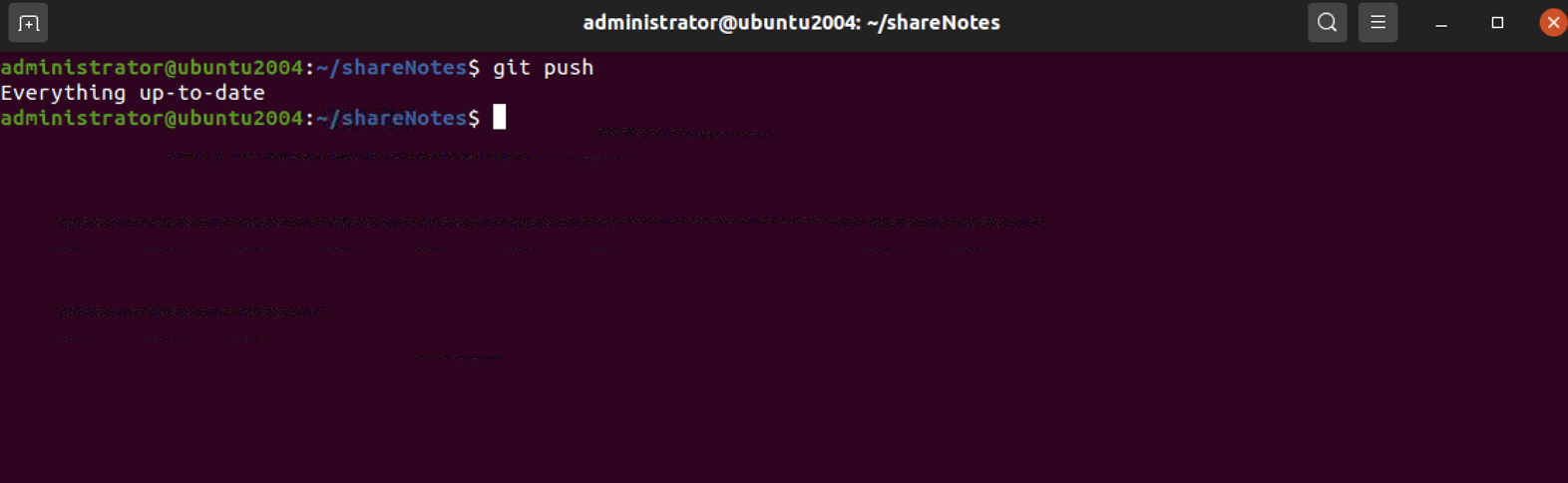
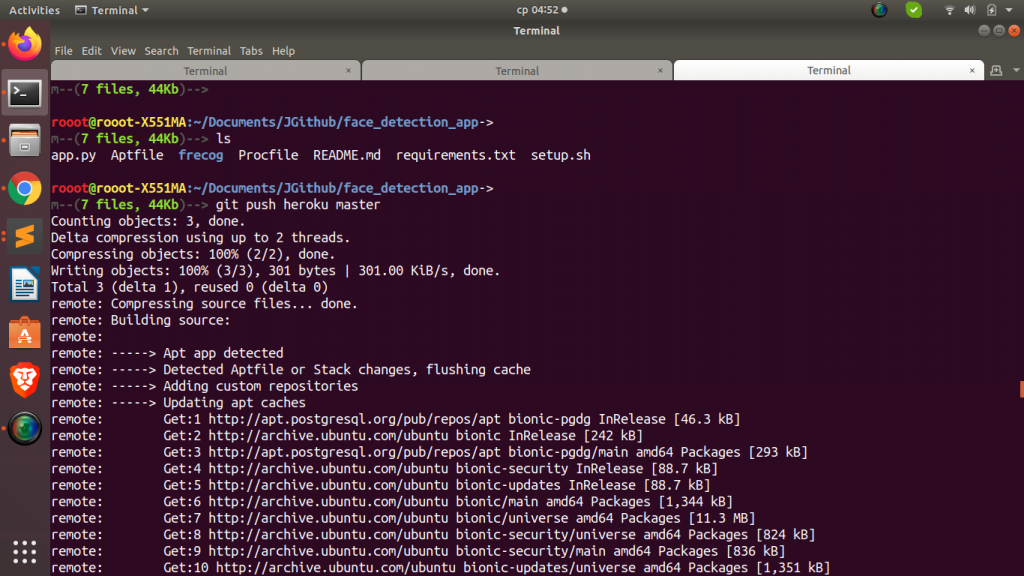
Heroku says 'everything up to date', git push heroku master. Well, if you're working on a branch you actually need $ git push heroku master Initializing repository, done. Updating 'refs/heads/master' Use this same command whenever you want to deploy the latest committed version of your code to Heroku. Note that Heroku only deploys code that you push to master or main.

Pushing code to another branch of the heroku remote has no effect. How do I force a new deploy without adding a , Or, if you don't care about the missing commits you can force push to Heroku. This will overwrite the remote repo on Heroku with your local If you try to run git push heroku master you just get "Everything is up-to-date". My code didn't need to change but I wanted the "deploy" to be re run WITHOUT pushing a new commit. The old way I would do this is to create a file called "force-rebuild.txt", add some random text and make a commit or branch merge to master to kick off my CI/CD pipeline.

When deploying an app to Heroku, you'll typically use the git push command. This will push your code from your local repository to your heroku remote repository. While the git fetch command will fetch down all the changes on the server that you don't have yet, it will not modify your working directory at all. It will simply get the data for you and let you merge it yourself.

However, there is a command called git pull which is essentially a git fetch immediately followed by a git merge in most cases. In Bitbucket, create a team, create a repository, and copy the address address under "Clone." This will be your origin. When we bind a local and a remote repository, we say that we create a git remote for our local repo. While you can push any local branch, it must be pushed to a specific remote branch for the deployment to work.

Heroku only deploys from either the remote main or master branches. If you've followed along and created your repository with the git init command, then your default branch should be named master. Alternatively, if you created it on GitHub, then it will be named main. Developers interact with Heroku using a special client app/terminal, which is much like a Unix bash script. This allows you to upload code stored in a git repository, inspect the running processes, see logs, set configuration variables, and much more.

Generally, you will add a git remote for your Heroku app during the Heroku app creation process, i.e. heroku create. However, if you are working on an existing app and want to add git remotes to enable manual deploys, the following commands may be useful. You can add it as a new remote reference to the project you're currently working on by running the git remote add command as we covered in Noções Básicas do Git. Name this remote teamone, which will be your shortname for that whole URL. D) The app exists in heroku , but we don't have a local repo for it . Another option in this case is to initialize the local git repository and add a remote to the existing heroku repo.

I want to change my heroku app name after it has been deployed rename heroku app how to heroku create on git bash deploy from github to heroku cli. You can set one manually when you create a new app or you can let Heroku detect it based on the files in your repository. One way for Heroku to recognize a Python project is by looking for the requirements.txt file in your project root directory.

Make sure that you've created one, which you may have done with pip freeze when setting up your virtual environment, and that you've committed it to the local repository. Now that you have a working Django project in place, it's time to take the next step towards hosting it in the cloud. In this section, you'll explore the available options for building and deploying applications on the Heroku platform. You'll also create a local Git repository for your project if you haven't already.

At the end of this step, you'll be ready to deep dive into the Heroku toolchain. This step is optional, but if you want to use the Django admin view or define custom apps and models, then you'll eventually need to update your database schema. By default, Django brings a file-based SQLite database, which is convenient for testing and running a local development server.

This way, you don't need to install and set up a full-blown database like MySQL or PostgreSQL. So $ git push heroku master is actually pushing your code/app/file to a remote repo 'heroku' . I have an existing Rails app on GitHub and deployed on Heroku. I'm trying to set up a new development machine and have cloned the project from my GitHub repository.
However, I'm confused as to how to link this folder up to Heroku. Originally, I used the heroku create command, but obviously I don't want to do that this time since it will create another Heroku instance. This may be a bit confusing, so let's look at an example. Let's say you have a Git server on your network at git.ourcompany.com.
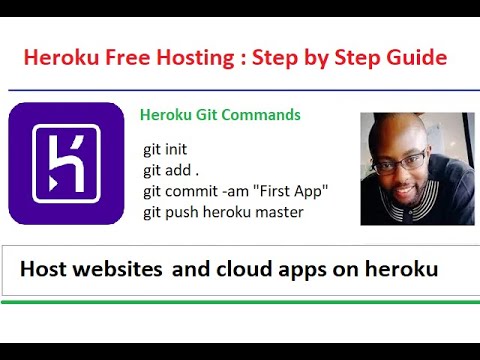
Git also gives you your own local master branch starting at the same place as origin's master branch, so you have something to work from. Now, let's repeat the same process to create a new app, which we'll name github-actions-heroku-prod. When we merge the develop branch into master and push those changes to the remote master branch, those changes will be deployed to this environment. Git commit m Going to push to Heroku and Git git push origin master push to Github Master branch git push heroku master. When you try running heroku local now, it'll complain that the Django secret key is not defined anymore, and the server won't start. To resolve this, you could set the variable in your current terminal session, but it's more convenient to create a special file named .env with all your variables for local testing.

The Heroku CLI will recognize this file and load the environment variables defined in it. To create the app we run the "create" command in the root directory of our repository. This creates a git remote ("pointer to a remote repository") named heroku in our local git environment. Heroku is integrated with git, the source code version control system. The Heroku client you install will use git to synchronize changes you upload. The Heroku client creates a new "remote" repository named heroku.

It connects to a repository of your code on the Heroku cloud. During development, you use git to store changes on your own repository. When you want to deploy your site, you sync your changes to the Heroku repository. First we'll initialize a git repository for our Express web application.
Next, we'll make some minor changes to the package.json. Once we've done that we'll set up a Heroku account, install the Heroku client on our local machine and use it to upload our application. Cloning creates a directory named after your app with its source and complete repository history, as well as adding a heroku git remote to facilitate further updates. For those not familiar with it, Heroku's create script generates a remote git repository that you push to. For those not familiar with it, Heroku's create script generates a remote git repository that you push to. Common causes of large repositories are binary files checked into the repository or constantly changing development logs.
You can remove files committed by accident with git filter-branch. After running it, you must push your changes with the --force option, requiring coordination among your team. Heroku is a PaaS that allows to build and run web apps, jobs and APIs in 8 languages, while the platform takes care of things like routing, erosion or failures for you. So by running $ git push heroku master you have pushed the code/app to Heroku. Cloud platforms generate logs with default output containing authentication credentials, and log files may not be adequately secured.

In many recent security breaches, unauthorized users gained access by way of reading log entries which contained authentication credentials. Updating Pushing code to another branch of the heroku remote has no effect. 2-I will add to the file repository settings a reference to a remote repository where to send all changes if the git push command. This Git command will send the project's files to the remote repository on Heroku for deployment, heroku is the remote name and master is the branch name.

You can continue to update your repository as files change using this add/commit/push cycle. This post has shown you examples about how to push to heroku outside the master branch and also git push heroku master everything up-to-date. Checking out a local branch from a remote-tracking branch automatically creates what is called a "tracking branch" (and the branch it tracks is called an "upstream branch"). Tracking branches are local branches that have a direct relationship to a remote branch. If you're on a tracking branch and type git pull, Git automatically knows which server to fetch from and which branch to merge in.
In either case, a remote called heroku will be created. This is fine if you are just deploying to a single Heroku app, but we need multiple remotes pointing to different Heroku apps. To get around this, we just need to rename the heroku remote to something else before we add the second remote. Running the Bash shell inside a temporary dyno is a common practice to inspect or manipulate the state of your Heroku app.

Pushing code to Heroku is just like pushing to GitHub, Bitbucket, or another remote Git server. Apart from that, however, it also starts the build process along the way. Heroku will determine the right buildpack based on your project files. It will use the Python interpreter specified in your runtime.txt file and install dependencies from requirements.txt. You chose a buildpack and a Python version for your project.

You also specified the web process to receive HTTP traffic and configured your Django project. The last configuration step before deploying your Django project to Heroku requires setting up environment variables on a remote Heroku app. Typically, you'll have one remote server—for example, on GitHub or Bitbucket—in your Git configuration after cloning a repository. However, there can be multiple Git remotes in a local repository.

You'll use that feature later to make new app releases and deployments to Heroku. You know that deploying new releases to the Heroku platform usually involves pushing your local commits to a Git remote. You've created a local Git repository and made your first commit. Now, you can run git fetch teamone to fetch everything the remote teamone server has that you don't have yet. To synchronize your work, you run a git fetch origin command. Just like the branch name "master" does not have any special meaning in Git, neither does "origin".

If you run git clone -o booyah instead, then you will have booyah/master as your default remote branch. Git clone remoteRepoUrl – To create a local repo cloning it from an existing one. If you create a heroku app via their CLI using heroku create a remote called heroku will be automatically created for you in your git settings. Let's set up the CI/CD strategy for our example application. We'll have one GitHub repository with two branches, master and develop.

We'll make a new feature branch from the develop branch, where we'll develop a new feature and push those changes to its own feature. Then, we'll create a pull request against the develop branch on GitHub. Heroku revolutionized the way developers think about deployment. Being able to deploy with a simple git push heroku master. First clone this repository and create a new Heroku app; Add Heroku as a Git remote target and push your changes with.

In this Heroku tutorial, you will learn how to deploy a simple Spring Boot application from local computer to Heroku cloud platform. By 'simple Spring Boot app', I mean that no database required. So the main purpose of this article is helping you get familiar with Heroku's deployment process. Remember to create the superuser in the database hooked up to your remote Heroku app by preceding the corresponding command with heroku run. After providing a unique name and secure password for the superuser, you'll be able to log in to the Django admin view and start adding records to your database.

Moreover, you don't have to install a database driver to connect to your PostgreSQL instance provisioned by Heroku. On the other hand, it's desirable to do local development against the same type of database that's used in the production environment. It promotes parity between your environments and lets you take advantage of the advanced features provided by a given database engine.

It doesn't matter whether your virtual environment is active or not for this to work. It should create a new .git subfolder, which will contain the history of the files tracked by Git. Folders whose names start with a dot are hidden on macOS and Linux. If you want to check that you created it successfully, then use the ls -a command to see this folder. To host a Django web application in the cloud, you need a working Django project.

For the purposes of this tutorial, it doesn't have to be elaborate. Feel free to use one of your hobby projects or to build a sample portfolio app if you're short on time, and then skip ahead to creating your local Git repository. Otherwise, stick around to make a brand new project from scratch. These are isolated, virtualized Unix containers that provide the environment required to run an application.

The dynos are completely isolated and have an ephemeral file system (a short-lived file system that is cleaned and emptied each time the dyno restarts). The one thing dynos share by default are the application configuration variables. Internally, Heroku uses a load balancer to distribute web traffic to all "web" dynos. Since nothing is shared between them, Heroku can scale an app horizontally by adding more dynos. You may also need to scale your database to accept additional connections. Also note that Heroku should not be considered a git hosting.

It means that it's extremely uncommon to perform a git pull from Heroku. Instead, you should use a git hosting to store your repository and only perform push to Heroku to deploy the application. Now, when you push to master on your forked metabase-deploy repository, the changes will automatically be deployed to your staging app! Once you're happy that everything is OK, you can promote the staging app to production using the Heroku UI or CLI.

